
October 05, 2026


May Day is the one old British festival that still refuses to sit quietly in a museum case. On the first of May you can hear a college choir singing from a tower at six in the morning in Oxford, watch a man vanish inside a cage of leaves and dance through the streets of Hastings, or stand in a Cornish town while a hobby horse charges past and everybody sings at it. Very little of this is staged for visitors. It is simply what those places have always done, and it is far easier to enjoy once you know what you are watching.
May Day sits on the hinge between spring and summer, and older calendars treated it as the beginning of the warm half of the year. In Gaelic tradition the same moment is Beltane, when cattle moved to summer pasture and fires were lit on the hills. Across England it was a quarter day for rents and hiring, a rare holiday for labourers, and above all a day for going out at dawn to gather greenery.
The night before mattered just as much. May Eve was believed to be a time when the usual rules loosened: fairies were said to be on the move, a neighbour might quietly steal the goodness from your dairy, and anyone walking alone after dark was taking a small risk. Most of the customs below grew out of that mixture of celebration and caution. A few communities also kept to the older reckoning after the calendar changed in 1752, which is one reason May customs here are scattered across the first fortnight of the month rather than landing neatly on the first.
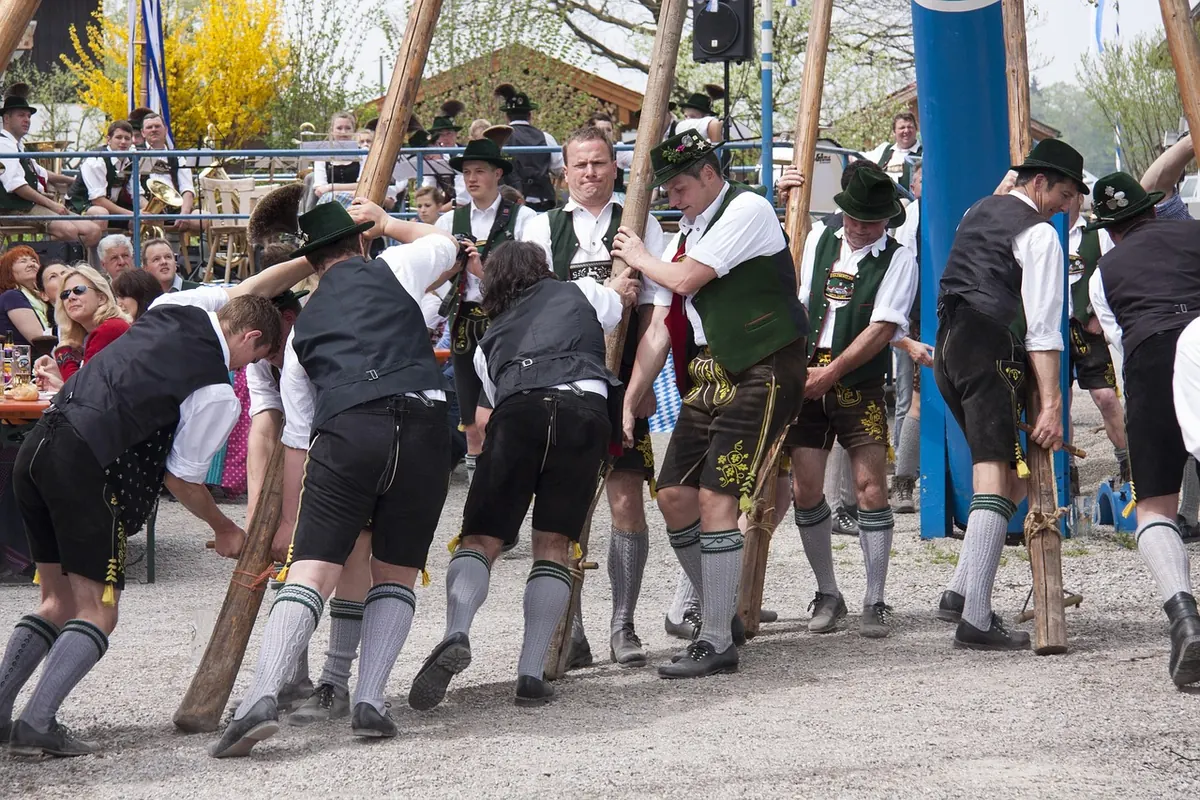
The old phrase was "bringing in the May", and the May was the greenery itself: hawthorn, birch, cowslips, whatever grew nearby and was in flower. Branches were carried home at dawn and fixed over doorways, and the tallest, straightest pole available was raised on the green and dressed with ribbons.
Dancing the maypole is a plaiting exercise. Each dancer holds a ribbon and moves in a set pattern, over and under the next person, until the ribbons wrap the pole in a woven sleeve. Get the pattern wrong and the pole ends in a tangle, which is half the entertainment for onlookers. Some villages keep a permanent pole that comes down only for repainting or repair; at Barwick-in-Elmet in Yorkshire the pole is lowered and re-erected on a three-year cycle, with a good deal of ceremony attached.
A May Queen was usually a local girl chosen for the year and crowned with flowers, sometimes beside a May King or Lord of the May. Children's celebrations were simpler and more mercenary: a wooden hoop covered in flowers and leaves, carried door to door, with a doll in the middle and a request for a coin or a piece of cake.
May Day was the chimney sweeps' day off. In towns the sweeps paraded with musicians, a Lord and Lady, and a figure called Jack in the Green: a man inside a tall frame of hoops covered in ivy and leaves, with only his face showing through a gap. The costume was hot, heavy and nearly blind, so the wearer needed someone to steer him along the street.
The tradition survived in a few places and has been revived in others, notably at Hastings, where a Jack in the Green leads a May bank holiday procession through the old town. Rochester holds a sweeps festival over the same weekend, with morris sides dancing in the streets. Jack is not quite the same character as the Green Man carved into so many church roofs and pillars, though the two are often mentioned in the same breath.
May Eve belonged to the fairies. They were said to travel between their hills and to take exception to being watched, so people stayed indoors, left a bowl of cream or bread on the step, and avoided the paths and thorn trees known to be theirs. The hawthorn, or May tree, was treated with particular care. Cutting one down was thought to bring bad luck on the household, and in many counties bringing hawthorn indoors was unlucky too, even though the same blossom was carried in May garlands elsewhere. Folklore rarely bothers to be consistent.
May morning itself offered small, practical magic. Washing your face in the dew was said to keep your complexion fair for the year; in some accounts you rolled in it. Rowan twigs were tied above doorways to keep harm out, and a young woman hoping to know her future husband might put flowers under her pillow and expect to dream of him.
Ne'er cast a clout till May be out.
That old warning is usually read as advice about the weather, though it is sometimes argued that "May" here means hawthorn blossom rather than the month.
Dates move. Some customs are fixed to 1 May, some to the bank holiday Monday, and some to a local date such as 8 May, so check with the organisers before travelling. Timings can shift by an hour or a day at short notice.
Arrive early. Oxford's May Morning and Padstow's first of May draw large crowds, and parking is scarce; trains and buses fill up, and walking in from the edge of town is often quicker. Early May weather in Cornwall and Sussex is not to be trusted, so take a waterproof and expect to stand around.
If you would rather take part than watch, morris sides and dance groups usually recruit in winter and spend the early months practising, so a message in January is far more welcome than one in April. Schools and village halls hoping to raise a maypole need a clear space, a sturdy pole and someone patient with ribbons; a small group of children can manage a short pole perfectly well. If you gather greenery, take it from your own garden or a spot where picking is allowed, as many nature reserves and protected sites forbid it. And if you do nothing else, step outside at dawn on the first of May, wash your face in the dew, and see what the day does next.
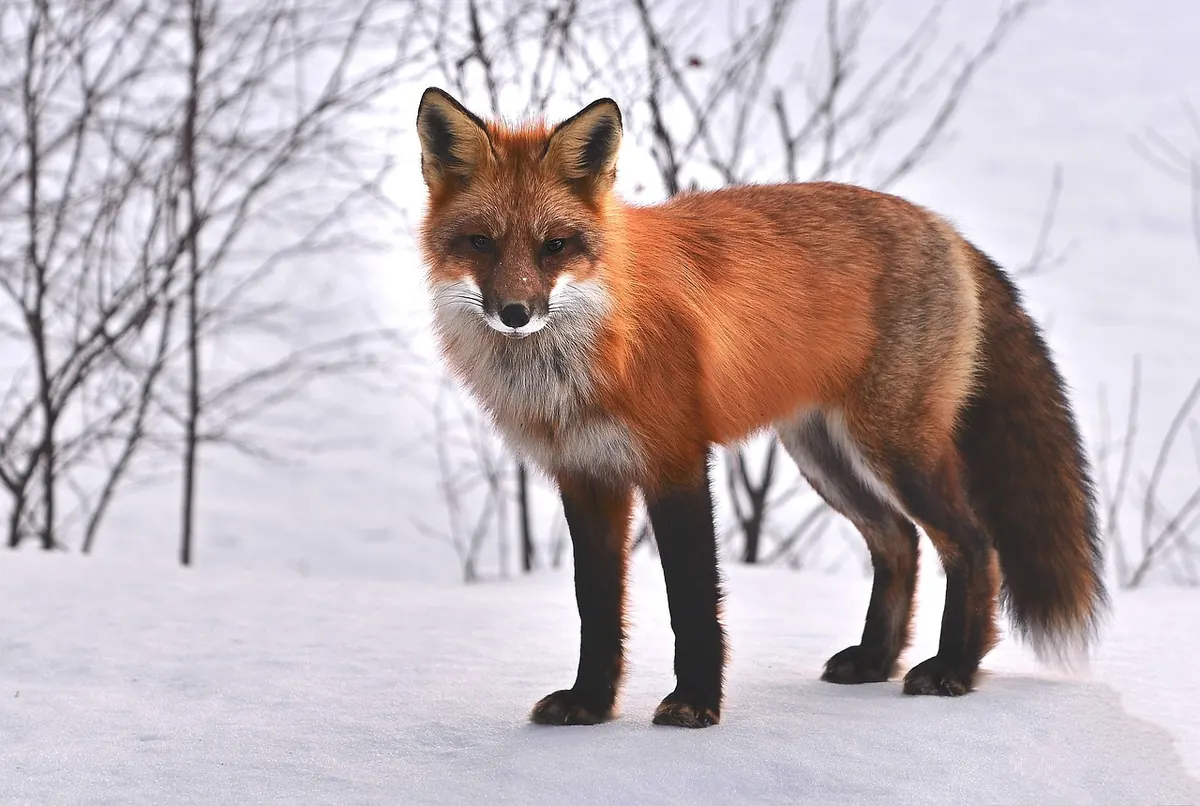
Photo: stux / Pixabay
Timeless tales and fables for every reader.
Copyright © 2026 Fable Page. All rights reserved. Fable Page.